Referral traffic, including visits from ChatGPT and other AI tools
Referral traffic is the visitors who got to your site by clicking a link somewhere else. It has always been a mix of real links and guesswork. AI tools have added a new source to it, and most of it is easy to see once you know what to look for.
Tag the links you place yourself so a visit arrives with its source named.
TL;DR
- Referral traffic is the visitors who got to your site by clicking a link somewhere else.
- It has always been a mix of real links and guesswork.
- AI tools have added a new source to it, and most of it is easy to see once you know what to look for.
Stickybeak is live analytics for every site you own, and you can click to filter visits by referrer. It is in early access.
Get early accessWhat is referral traffic?
Someone reads an article, a forum thread or a directory listing that links to your site, and clicks. That visit is referral traffic, and the page they clicked from is the referrer. It is different from search traffic (they came from a search results page), social traffic (they came from a social platform) and direct traffic (no source was recorded). If you post on social, the engagement rate calculator measures how people reacted to the post, before any of them reach your site.
Referral traffic is useful because it is the only kind where another site has vouched for you in public. A link in a good place sends people who already have a reason to be curious.
Every analytics tool sorts visits into channels, and the details differ by tool, so check yours. The usual split looks like this:
| What arrived with the visit | Usually filed as | Example |
|---|---|---|
| A UTM tag | Whatever the tag says | utm_medium=email is email |
| A referrer from a search engine | Organic search | A click from a Google results page |
| A referrer from a social platform | Social | A click from a Reddit post |
| A referrer from any other site | Referral | A click from a blog that links to you |
| Nothing | Direct | A typed address, or a link that sent no referrer |
How analytics tools detect it
When you click a link, the browser can tell the next site which page you came from. It does this in a request header called Referer (the spelling mistake is in the original standard), and your analytics script can also read it in the page as document.referrer. The tool compares it with your own domain and, if it is a different site, records a referral from that domain.
If the link carries UTM tags, most tools trust those over the referrer. That is why the UTM parameters guide matters for any link you control.
?gclid=…googleGoogle Ads?fbclid=…&utm_medium=paid_social facebookMeta Ads?utm_source=newsletter&utm_medium=email newsletterEmailchatgpt.comchatgpt.comChatGPTgoogle.comgoogle.comGoogle Searchinstagram.cominstagram.comInstagramcoffeeblog.netcoffeeblog.netReferralWhen the referrer goes missing
The referrer is a courtesy from the browser, not a guarantee. According to MDN, browsers decide what to send using a referrer policy. The default is strict-origin-when-cross-origin, which sends only the origin (the site, not the exact page) when the click leaves one site for another, and sends nothing at all when the visitor moves from an HTTPS page to an HTTP one. A site can also tell browsers to send no referrer, and a link marked rel="noreferrer" sends none.
Two practical effects:
- You usually see the site, not the page. The referrer tells you a visit came from a given site, but often not which article on it.
- Some visits become direct. Clicks from email apps, messaging apps and some native apps commonly arrive with no referrer. When those links carry no UTM tags, they are real referrals that your reports file as direct. The direct traffic guide covers what that channel holds.
https://coffeeblog.net/best-grindershttps://rel="noreferrer"NothingDirectThe fix for links you control is a UTM tag. For links other people place, you can only work with what arrives.
Referral traffic from ChatGPT, Perplexity, Claude and other AI tools
When an AI tool answers a question and shows a link to your site, a click on that link is a referral like any other. What has changed is how many places those links appear.
What a published source shows about how these visits arrive:
- Plausible, an analytics vendor, reported in December 2024 that ChatGPT, Perplexity, Claude and Phind all showed up as sources of traffic to its own site, with ChatGPT and Perplexity its two top-performing AI channels.
- In the same write-up, Plausible noted that ChatGPT added
utm_source=chatgpt.comto the link automatically. That means a ChatGPT visit can be recognised even if the referrer is trimmed or lost.
Behaviour like this is set by the AI tools and can change without notice, so treat the list as what was reported on that date, not a standing rule. For any tool not named above, including Gemini, the quickest check is to look at your own referrer list and see what turns up.
What you will not see
A person can read an AI answer, remember your name and search for you later. That visit is filed as organic search or direct, and nothing in it says an AI tool was involved. So the AI referrals you can count are a floor, not the full picture.
chatgpt.comgoogle.comCrawlers are a different thing
AI companies also run bots that fetch pages, to train models or to answer a question on the spot. A bot hit is software, not a person who arrived. Keep it out of your visitor numbers and look at it separately. Stickybeak's bot report does this: it sorts AI assistants, search engines and scrapers by what they are after, and keeps bots out of visitor counts.
How to see AI referrals in your analytics
- Open your referrers or sources report for the last 30 days.
- Look for the AI tools' domains. Start with
chatgpt.com,perplexity.aiandclaude.ai. Search your list for any other AI tool you have heard of. - Check the UTM source report too. A visit with
utm_source=chatgpt.commight not appear in the referrer list. - Look at the landing pages. They show which of your pages AI tools are linking to, which tells you what to keep accurate and up to date.
- Compare against sales or goals. A small number of AI visits that convert is worth more than a big number that bounce.
- Keep it readable. Group the AI domains into one saved view or filter so you can watch the total over time.
In Stickybeak
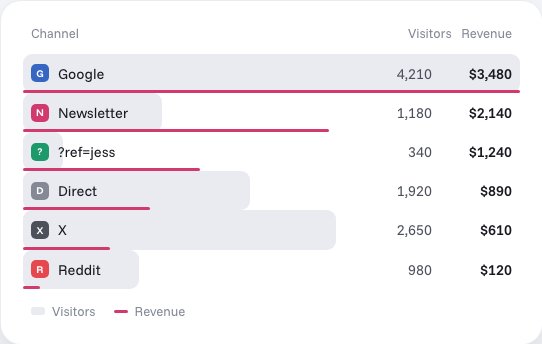
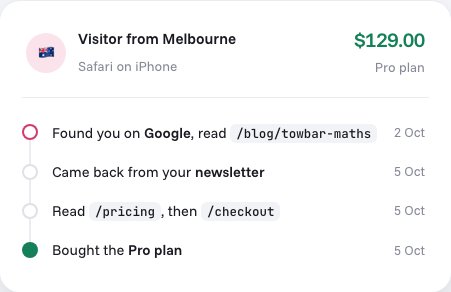
Stickybeak is live analytics for every site you own, and it's in early access. You can click any referrer to filter the wall by it, and with real-time analytics you see a link's visits arrive as they happen. Revenue is broken down by channel, campaign and ?ref= code. Each order keeps its trail: the entry page, the referrer, every UTM tag and the pages read before buying. If an order came through a link from an AI tool, the referrer or tag is in that trail, next to what the visitor bought.
Our own numbers
We'd like to show you what share of visits to Stickybeak's own sites comes from AI tools. We can't yet. Stickybeak has only been tracking usestickybeak.com since 6 October 2026, and as of 8 October the count is 8 visitors, which is too few to say anything honest about a share. We'll add real figures here once there are enough to mean something, with the dates they cover.
Questions
What is referral traffic?
Visits that arrive by clicking a link on another website. Your analytics tool knows because the browser tells your site which page the click came from. That is called the referrer.
Is traffic from ChatGPT referral traffic?
Yes, when someone clicks a link in a ChatGPT answer and lands on your site. Plausible reported in December 2024 that those visits arrived with utm_source=chatgpt.com added to the link automatically, so they can be told apart from other referrals.
Why is some of my traffic listed as direct?
Direct means the visit has no identifiable source: no referrer and no campaign tag, or none your analytics tool recognises. A UTM-tagged visit usually keeps its campaign attribution even without a referrer. Untagged visits land in direct when someone types your address, uses a bookmark, clicks a link in an email or messaging app that sends no referrer, or comes from a page that told the browser not to send one.
Can I tell which AI tool sent a visit?
Only when the visit carries a referrer or a UTM tag naming the tool. Filter your referrer list for the tools' domains. Visits from a tool that sends neither will sit in direct.
Is an AI crawler the same as AI referral traffic?
No. A crawler is software fetching your pages. A referral is a person who clicked a link and arrived. Keep the two apart in your reports.
Sources, checked 8 October 2026: MDN Web Docs, Referer header (when the header is omitted or trimmed). Plausible, AI referral traffic and optimization, 11 December 2024 (AI tools as traffic sources; utm_source=chatgpt.com added automatically).