Campaigns and attribution
Attribution models
Multi-touch attribution shows the visits that led to an order, then chooses which visit gets credit when a buyer returns more than once.
Marketing attribution: first touch and last touch
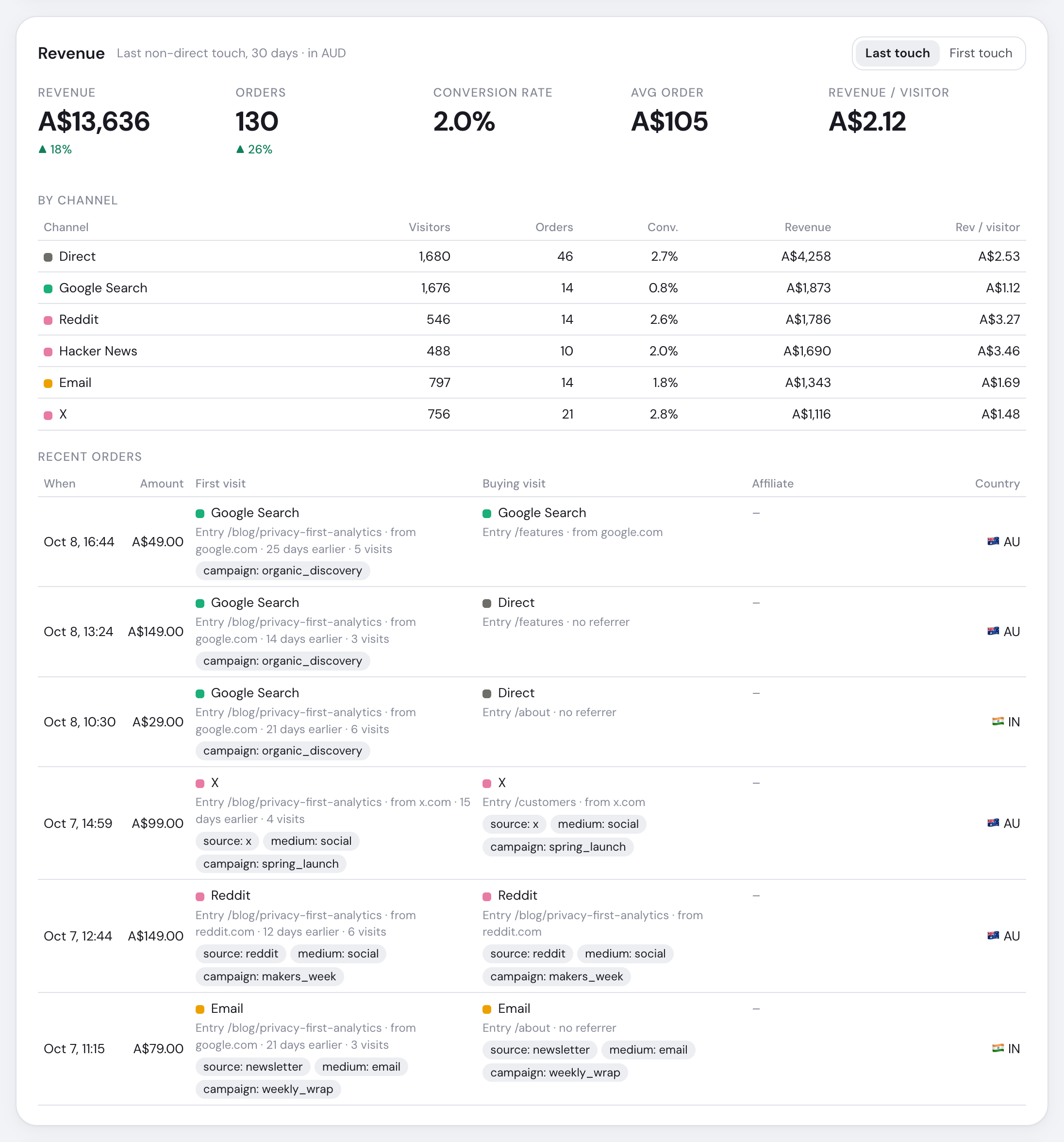
- Attribution window and reporting currency
- Switch between last-touch and first-touch credit
- Attributed revenue and prior-period change
- Visitors who completed a purchase
- Visitors, orders and revenue by channel
- Recent orders with first and buying visits
| Model | Credit |
|---|---|
| Last touch (default) | Most recent non-Direct visit in the previous 30 days; otherwise the buying visit |
| First touch | The buyer's first recorded visit |
The Revenue chart and By channel table follow the switch. Source, landing-page and campaign breakdowns remain last-touch.
Example
| Date | Visit | Credit |
|---|---|---|
| 2 Oct | Google Search | First touch |
| 5 Oct | Email newsletter | Last touch |
| 9 Oct | Direct purchase | Skipped by last touch |
Report rules
| Report | Rule |
|---|---|
| Revenue chart, By channel | Selected model |
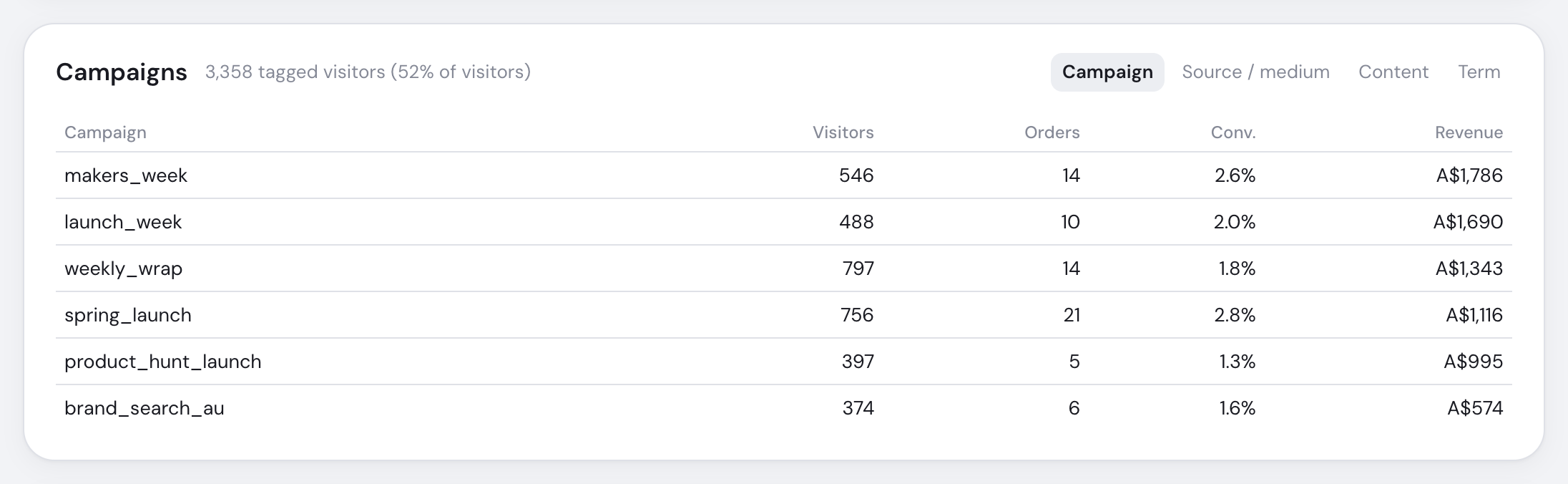
| Revenue source, campaign, landing page; Campaigns | Last touch |
| Affiliates | Latest affiliate inside its credit window |
| Goals | Channel of the visit where the goal happened |
| Internal links | Orders within 30 days after the click |
What is saved
Each order stores its first visit, buying visit, referrer, landing page, UTM tags, visit count and affiliate. Raw visits may later be archived; the order trail remains.
Recognition uses a one-year first-party cookie across the domain and its subdomains. It cannot join devices or separate domains, and browsers may shorten its lifetime. Privacy mode uses no cookie and records no revenue.
Hosted checkout returns
Stripe, PayPal, Klarna, Afterpay, Clearpay, Zip, Affirm and Link returns have no referrer. Other hosted checkouts can become a Referral visit if the return takes more than 30 minutes. On-page overlays avoid that split.